
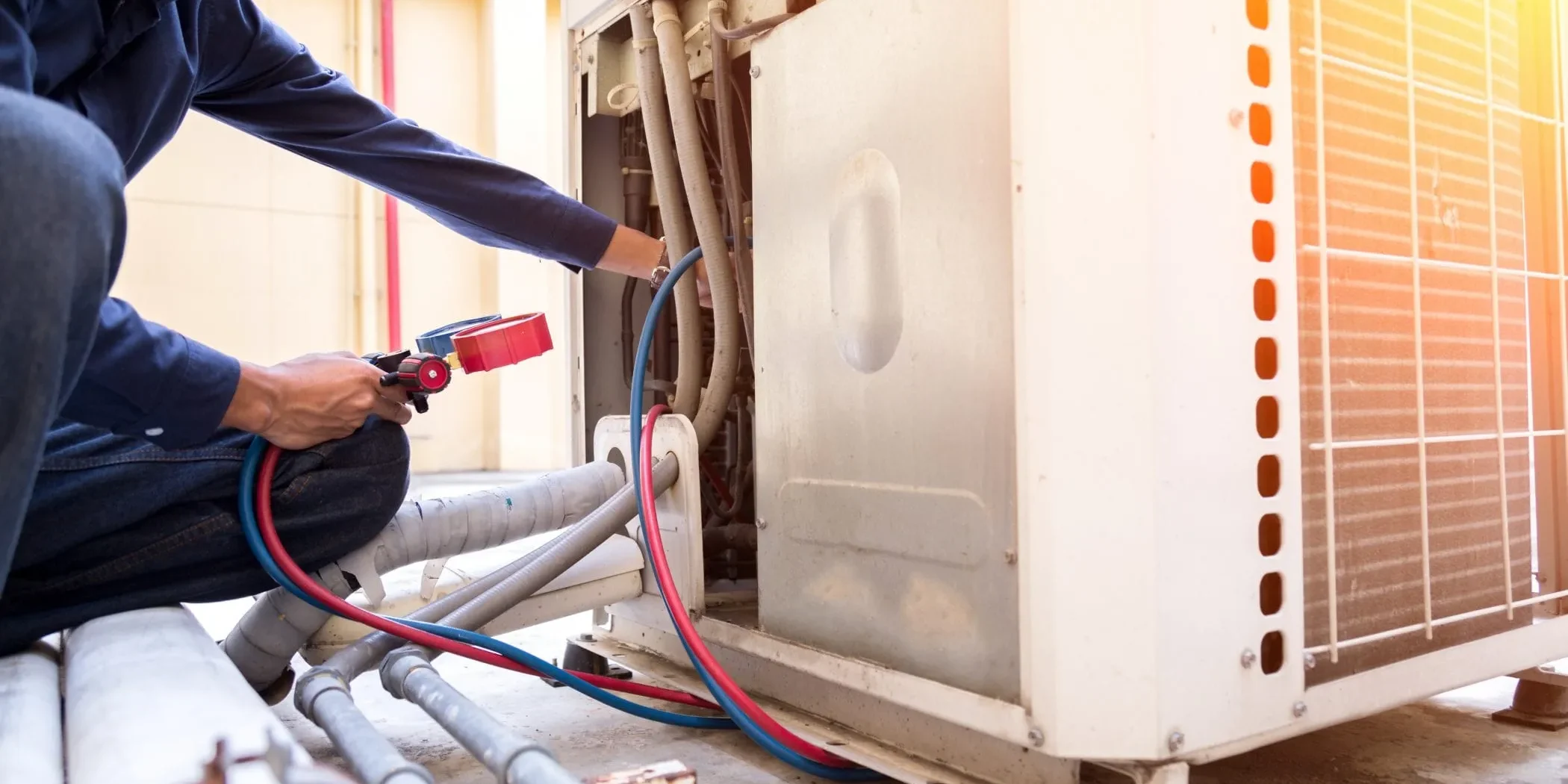
Did you know a brand-new air conditioner can still leave you with high energy bills and uneven cooling?
When that happens, homeowners often blame the equipment. But the real problem may be an installation mistake that forces the system to work harder, increases wear on expensive components, and shortens its service life.
Before paying for another AC repair or accepting poor cooling from a system you recently purchased, learn which installation mistakes may be responsible. This guide explains what can go wrong, the warning signs to watch for, and how the right HVAC contractor can help protect the comfort and value you expected from your investment.
But First, Why Does Proper AC Installation Matter?
An air conditioner does more than produce cold air. It must remove heat and humidity, circulate conditioned air through the ductwork, and maintain a consistent temperature without running longer than necessary.
Each part of the system needs to work together for that to happen. When one detail is missed during installation, the air conditioner may use more energy while delivering less comfort. Some problems appear immediately, while others slowly lead to higher utility bills, frequent AC repair, or a shorter system lifespan.
Choosing the Wrong Size Air Conditioner
One of the most damaging installation mistakes happens before the new equipment even arrives. Installing a system based only on the home’s square footage can result in an air conditioner that is too large or too small for the property.
A proper system recommendation should also consider:
- The home’s layout and ceiling height
- The number and condition of windows
- Insulation levels
- Sun exposure
- Existing ductwork
- Heat produced by occupants and appliances
What Happens When the System Is Too Small?
An undersized air conditioner may run for long periods as it tries to reach the thermostat setting. Even with extended cooling cycles, it may struggle to keep the home comfortable during the hottest days.
That constant operation increases energy use and places more wear on the compressor and other components. Over time, the homeowner may face rising bills and repeated calls for AC service.
What Happens When the System Is Too Large?
A larger air conditioner may sound like a faster way to cool the home, but oversized equipment often turns on and off too quickly. These short cycles may lower the temperature without giving the system enough time to remove indoor humidity.
The result can be a home that feels cool but damp. Frequent cycling also places added stress on the equipment and may cause premature component failure.
Ignoring Problems Within the Existing Ductwork
A new air conditioner cannot cool the home efficiently when conditioned air escapes before reaching the rooms. Damaged, disconnected, poorly insulated, or incorrectly sized ducts can waste much of the system’s cooling output.
Before an AC replacement, the ductwork should be checked for problems that could limit the new unit’s performance. Warning signs may include:
- Weak airflow from certain vents
- Rooms that remain warmer than others
- Excessive dust near registers
- Whistling or rattling sounds
- Unusually high cooling bills
Installing new equipment without addressing these issues can leave the homeowner with many of the same comfort problems they experienced with the old system.
Restricting Airflow Through the System
Every air conditioner needs steady airflow to absorb heat and distribute cool air throughout the home. Poor airflow may develop when the return ducts are too small, vents are blocked, or the indoor unit is installed in a cramped area with inadequate clearance.
Restricted airflow can cause the system to work harder while producing weaker cooling. In some cases, the evaporator coil may become too cold and freeze, leaving the air conditioner unable to cool the home.
An experienced HVAC contractor evaluates the complete airflow path during installation, ensuring air can enter, move through, and leave the system properly.
Adding the Wrong Amount of Refrigerant
Refrigerant plays an essential role in moving heat from inside the home to the outdoors. The system needs the correct refrigerant charge to complete that process efficiently.
Too little refrigerant can reduce cooling capacity and cause the air conditioner to run longer. Too much can raise pressure within the system and strain the compressor. Both conditions can reduce efficiency and lead to expensive AC repair if they are not corrected.
Because the required charge can be affected by the length of the refrigerant lines, it must be measured and adjusted during installation. Relying only on the unit’s factory setting may not be enough for every home.
Placing the Outdoor Unit in the Wrong Location
The outdoor unit releases the heat removed from the home. If it is placed too close to a wall, surrounded by shrubs, or installed in an area with poor ventilation, that heat may not escape efficiently.
The location should provide enough space for airflow and future maintenance. The unit should also rest on a stable, level base. An uneven installation can contribute to vibration, noise, drainage issues, and wear on internal components.
Proper placement helps the air conditioner release heat more effectively, making it easier for the system to cool the home.
Installing the Condensate Drain Incorrectly
As an air conditioner removes heat and humidity, it also produces condensation. That moisture must drain safely away from the equipment and the surrounding area.
A drain line with the wrong slope, loose connections, or no protection against clogs can allow water to collect around the system. This may lead to water damage, mold growth, or an automatic system shutdown.
Testing the condensate drain before completing the installation helps confirm that moisture can leave the system properly once cooling begins.
Positioning the Thermostat Poorly
The thermostat tells the air conditioner when to start and stop. If it is installed near a sunny window, exterior door, kitchen, air vent, or heat-producing appliance, it may detect a temperature that does not represent the rest of the home.
An inaccurate reading can make the system run too often or shut off before other rooms are comfortable. Placing the thermostat on an interior wall away from drafts and direct heat gives the system a more reliable temperature reading.
Skipping the Final System Testing
Finishing the physical installation does not mean the system is ready to perform at its best. The air conditioner should be tested under normal operating conditions before the job is considered complete.
A thorough startup should confirm:
- Airflow is reaching each part of the home
- Refrigerant levels are correct
- Electrical connections are secure
- The thermostat communicates with the system
- Condensation drains properly
- The unit starts, runs, and shuts down as intended
Skipping these checks can allow a small installation error to become a larger comfort or repair problem later.
Signs Your Air Conditioner May Have Been Installed Incorrectly
Installation problems can resemble equipment failure, which makes them easy to overlook. Scheduling an AC service may be worthwhile if a recently installed system shows any of these warning signs:
- The air conditioner runs almost constantly
- Energy bills remain unexpectedly high
- Some rooms receive little cool air
- The system turns on and off frequently
- Indoor humidity remains uncomfortable
- The equipment makes unusual noises
- Water collects near the indoor unit
- The system frequently needs repair
A professional evaluation can determine if the problem comes from the equipment, the installation, the ductwork, or another part of the cooling system.
Protect Your Comfort With Professional AC Installation
A new air conditioner is a major investment, and its performance depends on more than the brand or efficiency rating printed on the unit. Correct sizing, unrestricted airflow, accurate refrigerant levels, proper drainage, and complete startup testing all affect how well the system cools your home.
Planning an AC installation or AC replacement in Fishers, Carmel, Anderson, Noblesville, or a nearby Central Indiana community? Home Heroes AC Repair Noblesville can evaluate your home, explain your options, and install a system suited to its cooling needs. If your current air conditioner is already struggling, our team can also provide AC service and AC repair to find the cause and recommend the right next step.
Contact Home Heroes AC Repair Noblesville to schedule your air conditioning service.

At Home Heroes Plumbing, Heating & Air, we're parents, homeowners, and neighbors first. We know what it’s like to have a broken AC in the middle of summer or no hot water when you need it most.
Topics Covered
Not Sure What Your AC Problem Means?
Reading about the issue can help, but some cooling problems require a professional inspection to find the real cause. If your air conditioner is blowing warm air, running constantly, making unusual noises, or leaving parts of the home uncomfortable, contact Home Heroes AC Repair Noblesville.
Our team can inspect the system, explain what is wrong, and help you choose the right next step.
Call today to schedule professional AC service in Noblesville, IN.
"*" indicates required fields


